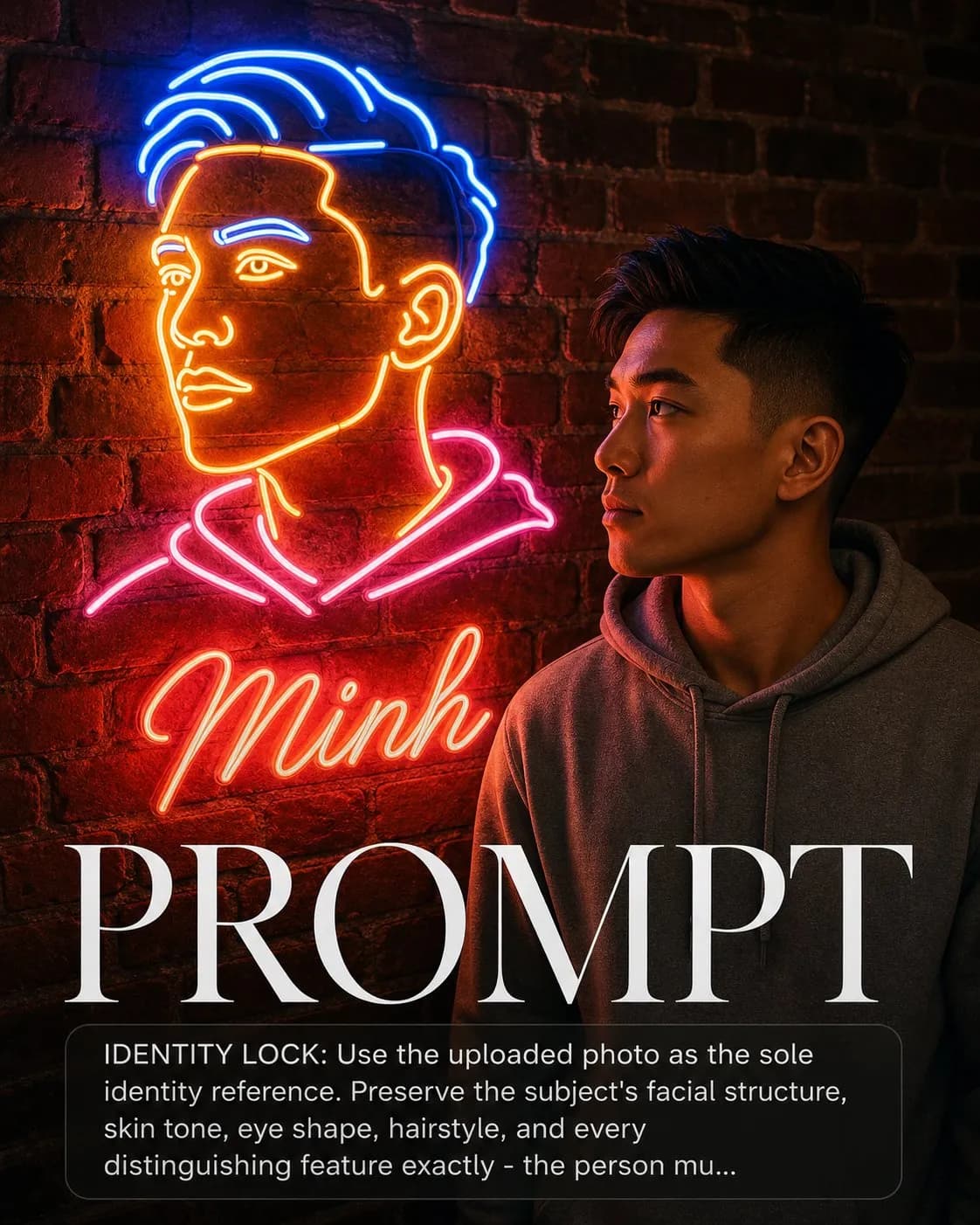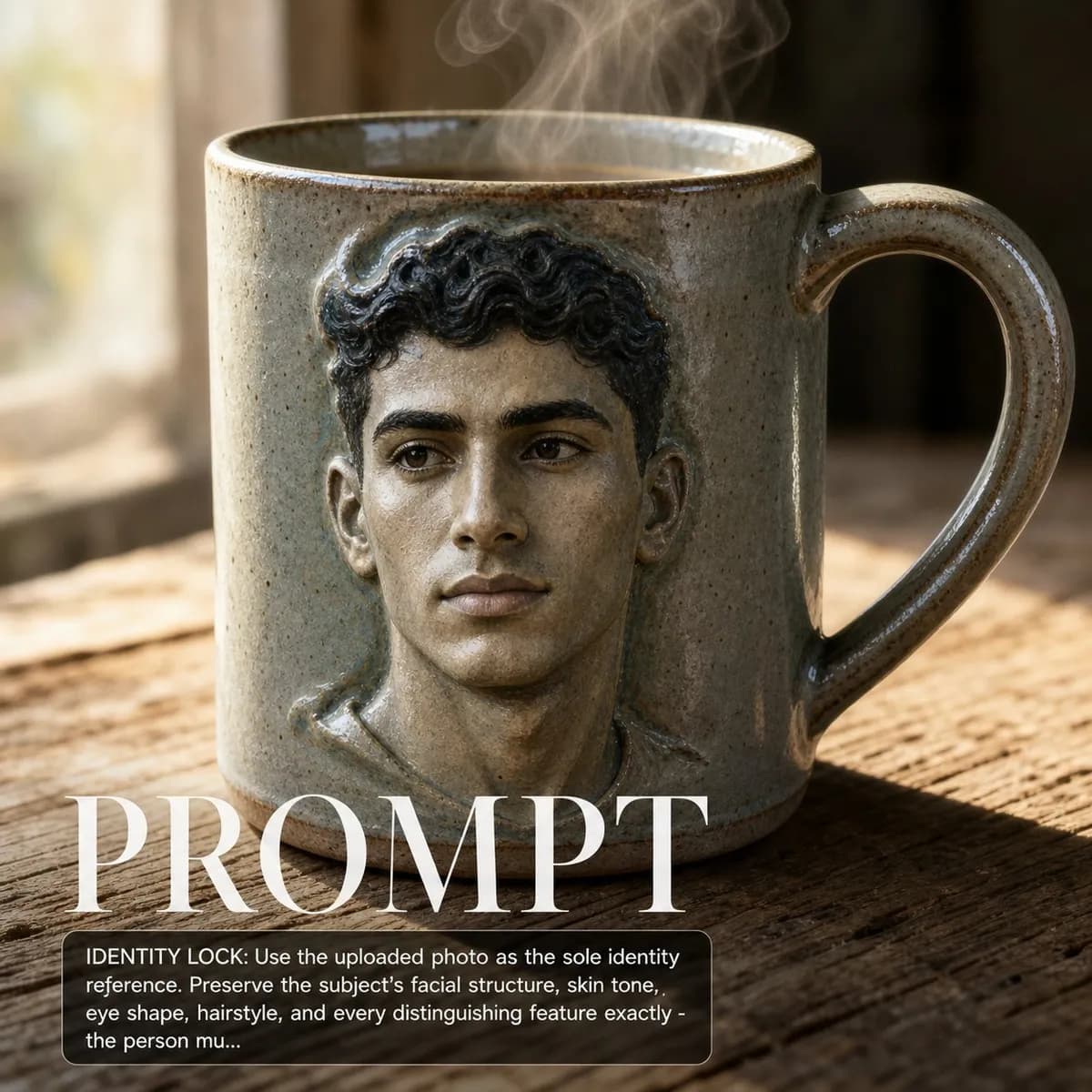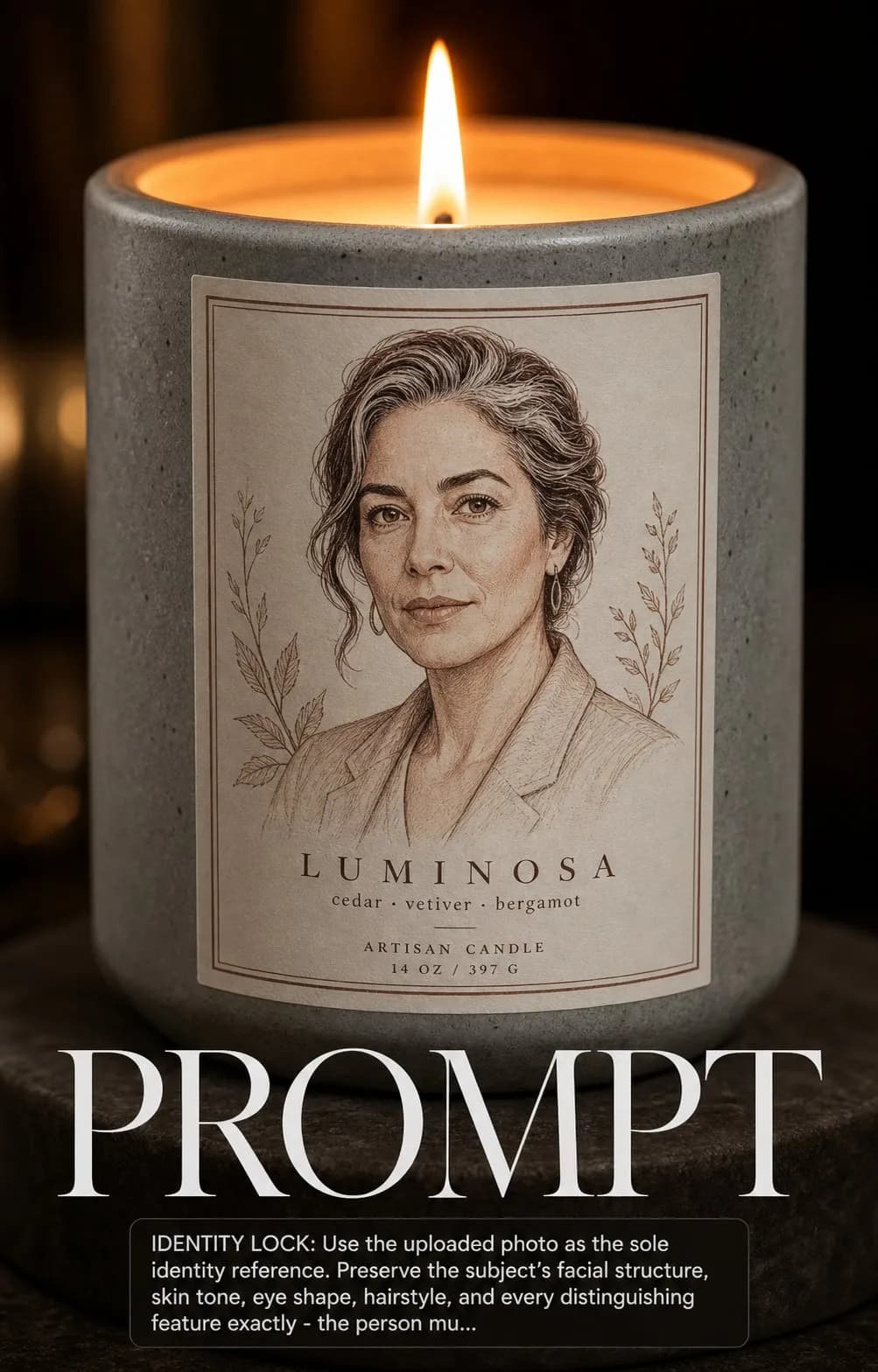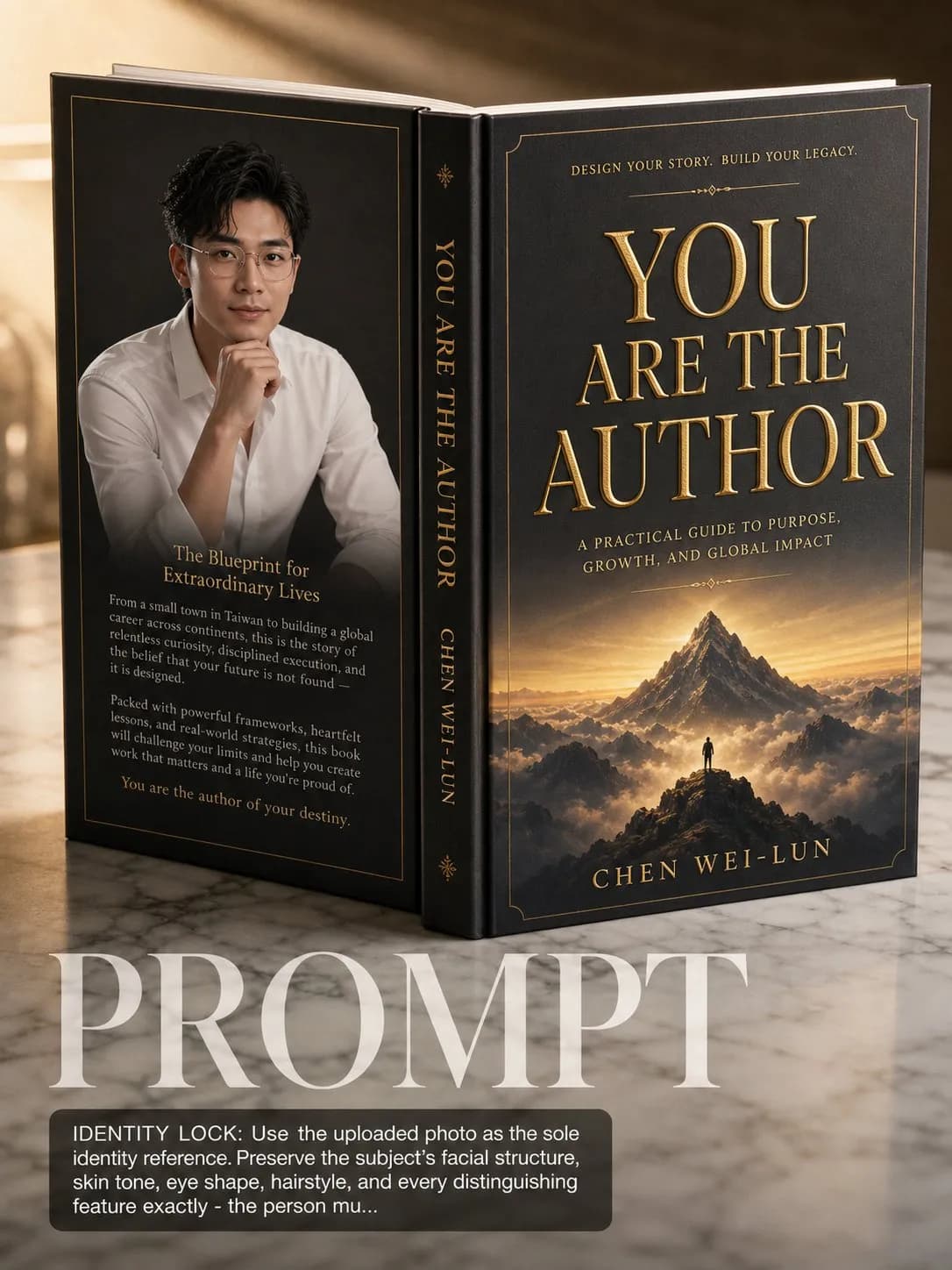


Key instructions to preserve
No beautification, no face reshaping, no expression change unless stated.
GuardrailUse a fictional magazine name — do not reproduce Vogue, TIME, GQ, or any real title verbatim.
IDENTITY LOCK: Use the uploaded photo as the sole identity reference. Preserve the subject's facial structure, skin tone, eye shape, hairstyle, and every distinguishing feature exactly — the person must remain instantly recognizable. No beautification, no face reshaping, no expression change unless stated. SCENE: Subject on the cover of a prestigious high-gloss magazine — not a real publication but clearly in the aesthetic register of Vogue, TIME, or GQ. The cover lines are compelling and relevant to the subject's energy. The masthead is bold and the subject fills 80% of the frame in a powerful editorial pose. PHYSICS & CRAFT: High-end cover photography lighting — large octabox at 45° key, V-flat fill opposite for near- shadowless editorial look, 5500K color temperature, slight skin-preserving retouching but not plastic. Gloss magazine stock visible at the edges. The cover lines type uses a premium serif-sans pairing. TECHNICAL EXECUTION: 85mm f/2.8, tight editorial portrait crop, subject's gaze direct and confident, cover lines positioned to avoid the face, barcode and date line at bottom. HARD CONSTRAINTS: Use a fictional magazine name — do not reproduce Vogue, TIME, GQ, or any real title verbatim. The subject's face must not be altered beyond editorial lighting. The pose must remain naturalistic.
0 people have copied this prompt
Magazine Cover Feature Subject is a packaging prompt for GPT Image 2, composed for a 3:4 image. No beautification, no face reshaping, no expression change unless stated.
No beautification, no face reshaping, no expression change unless stated.
Keep the prompt structure, then replace the main subject, action, or environment in "No beautification, no face reshaping, no expression change unless stated.".
Adjust one visual signal at a time, such as "85mm", "f/2.8", "ai image prompt", "luxury product & brand object", so you can identify which instruction changes the result.
Use the portrait frame for editorial-style compositions with enough surrounding context to establish the scene.
Use one clear reference image and retain the identity-lock instructions when changing clothing, lighting, background, or camera direction.
Use direct natural-language edits after the first generation. State what must remain unchanged before describing the single element you want to revise.
Judge the result by how clearly it communicates the intended packaging direction while keeping the subject, environment, and visual treatment consistent.
Three simple steps to generate your AI image.
Click the "Copy Full Prompt" button above to copy the entire prompt text to your clipboard instantly.
Open your preferred image generator and paste the prompt into the text input. You're ready to create.
Hit generate and watch the magic happen. Tweak the prompt parameters to make it your own.